
Coding
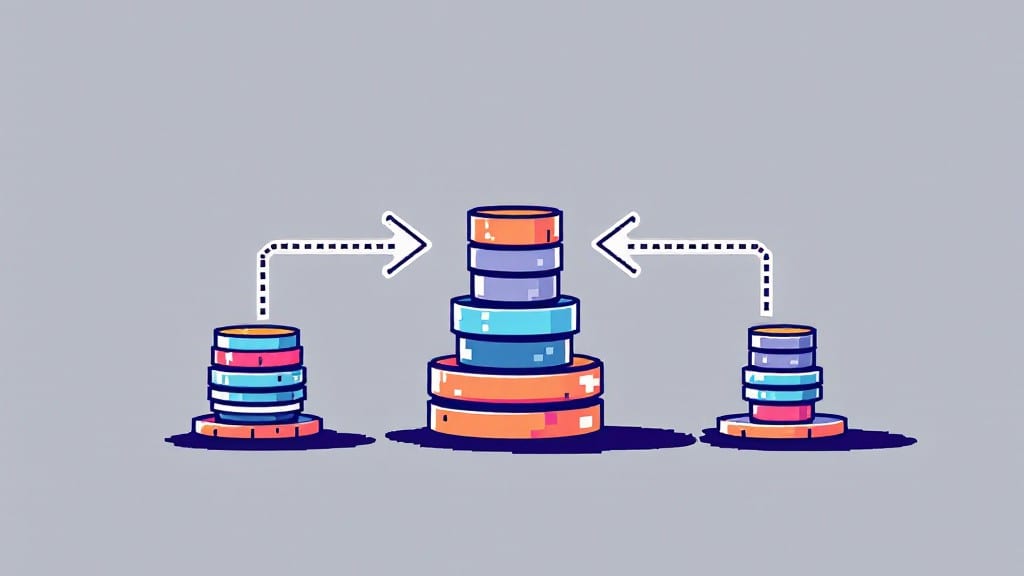
A many-to-many relationship example is when students can enroll in multiple courses and each course can have multiple students, requiring a junction table like enrollments to establish connections. This structure eliminates redundancy by using foreign keys to link records.
A classic scenario is an academic database where one student might take five courses while a single course could have 50 students. 🔥 This setup avoids duplicating student-course pairs in either table, which would bloat your database and make queries inefficient.
The junction table acts as a bridge, storing only the essential pairing data—student ID and course ID—while the original tables remain clean and normalized.
This design isn't just theoretical: it's the backbone of systems like course registration portals, social media tagging (where users can have multiple tags and tags can apply to many users), and even e-commerce (tracking which customers purchased which products).
The key insight? Without this pattern, you'd either need to repeat data endlessly or lose the ability to track complex relationships efficiently.
💡 In This Article
- How Junction Tables Work in Database Design
- Real-World Many-to-Many Database Scenarios
How junction tables work in database design
A junction table solves the core problem of representing multiple connections between two entities without duplicating data. Imagine the students table has 1,000 records and the courses table has 50.
Without a junction table, you'd need to store every possible enrollment combination directly in either table, creating 50,000 potential records—most of which would be empty. This violates database normalization principles by introducing redundancy and making updates difficult.
The junction table, like enrollments, acts as a lightweight bridge containing only the essential pairing data.
The magic happens through foreign keys, which are column references that enforce relationships. In our example, the enrollments table would have two columns: studentid (linking to the students table) and courseid (linking to courses). These foreign keys create the many-to-many connection while maintaining data integrity.
SQL automatically checks that every studentid exists in the students table and every courseid exists in courses, preventing orphaned records. This structure also enables efficient querying—you can quickly find all courses for a student or all students in a course without scanning entire tables.
Composite primary keys make junction tables even more powerful. Instead of using a single auto-incrementing ID, the combination of studentid + courseid serves as the unique identifier. This prevents duplicate enrollments (like a student being listed twice for the same course) while keeping the table lean.
For example, a record with studentid = 123 and courseid = 456 would uniquely identify one enrollment relationship. This approach also allows you to add extra attributes specific to the relationship, like enrollmentdate or grade, without cluttering the original tables.
Visualizing this with an Entity-Relationship (ER) diagram clarifies the flow. The students and courses tables connect through the enrollments table via lines representing the foreign key relationships. The diamond symbol in the junction table indicates it's a many-to-many resolver.
This diagram becomes your blueprint for creating the actual database schema in SQL. When you write the CREATE TABLE statements, you'd first define students and courses, then create enrollments with the foreign key constraints that enforce the relationships.
Here's where it gets practical: without this structure, you'd face what database designers call "update anomalies." For instance, if a student changes their email address, you'd need to update every record in every table where that student appears—potentially hundreds of times.
With a junction table, you only update the student's record once, and the relationships remain consistent automatically. This design pattern isn't just theoretical—it's how modern applications handle complex relationships efficiently, from social networks to inventory systems.
Let's look at the actual SQL implementation. You'd start by creating your base tables:
- students table with columns like studentid (PK), name, email
- courses table with columns like courseid (PK), title, instructor
Then create the junction table with a composite primary key:
- enrollments table with columns studentid (FK), courseid (FK), and enrollmentdate
- Add the constraint: PRIMARY KEY (studentid, courseid)
- Foreign key constraints: FOREIGN KEY (studentid) REFERENCES students(studentid) and FOREIGN KEY (courseid) REFERENCES courses(courseid)
This structure gives you a clean, normalized database where relationships are explicit and queries remain efficient, even with thousands of records. The junction table pattern scales beautifully—whether you're tracking 10 students or 10 million. 💫